Is copy trading legal, and is it safe?
Yes, copy trading is legal in most major countries, including the US and UK, when it's done through properly regulated brokers and platforms. Rules vary by region and by how the copying works, so verify with your local regulator.
- Copy trading legit
- Real-time copy trading
- Not legal or financial advice
Yes, copy trading is legal
Copy trading is legal in both the US and UK when it's done through properly regulated brokers and platforms, it isn't a loophole around the rules. Regulation depends on where you live and how the copying works. This page is general information, not legal or financial advice. Always verify the current rules with your regulator, or a qualified professional, for your own situation.
Is copy trading legal in the US and UK?
Copy trading is legal in both, the important detail is who is regulated and how the copying is treated. Here's the framing for each.
United States
CFTC · NFA · SECVerify a firm on the NFA's BASIC register or the SEC broker check before you sign up.
- Retail forex is overseen by the CFTC and NFA; brokers serving US clients must be registered.
- A provider who trades or copies on other people's behalf for a fee may need to register, for example as a Commodity Trading Advisor.
- CFDs are not available to US retail traders, and some global copy-trading platforms don't accept US clients.
- Stock and crypto copy trading exist under SEC/CFTC oversight, with their own rules.
United Kingdom
FCA · Retail CFD rulesCheck a firm is authorised on the FCA Register before you deposit any funds.
- Firms offering copy or social trading must be authorised by the FCA.
- Fully automated copy trading can be treated as a form of portfolio management, which carries its own authorisation requirements.
- CFDs are legal but come with retail protections: capped leverage (for example, 30:1 on major FX pairs), negative-balance protection and risk warnings.
- Providers can't promise returns, and marketing must be fair and not misleading.
Rules vary and change. Regulation differs by country and is updated over time. This is a general overview for the US and UK, it isn't legal advice, and it may not reflect the latest rules. Always confirm the current position with the relevant regulator, and take professional advice for your own circumstances.
What actually makes copy trading legal
A regulated broker
Your trades run through a broker that's regulated in your region. This is the single biggest factor.
A compliant provider
Legality usually comes down to three things, get these right and you're on solid ground in most jurisdictions. The signal source isn't acting as an unlicensed money manager: a tool that copies signals to your account is different from someone managing your money.
Your own compliance
You follow your local laws, including declaring and paying any tax due on trading gains where you live.
Legal is one thing. Safe is another.
Copy trading can be done relatively safely, but it's never risk-free, because you're trading real markets. Safe comes down to the choices you make. Here's how to reduce the risk.
Use a regulated broker
Trade through a broker regulated in your region, and verify it on the official register first.
Vet the signal source
Check a provider's real track record. Be sceptical of guaranteed-profit or "can't lose" claims, they're a red flag.
Keep control of your funds
Prefer setups where your money stays in your own account rather than being handed to someone to manage.
Set your own risk limits
Define lot size, risk per trade and stop losses. Never copy blindly with no limits in place.
Test on a demo first
Try any copier on a demo account before going live, then start small and scale slowly.
Only risk what you can afford
Copy trading can lose money. Never trade with funds you can't afford to lose.
Use a regulated broker
Trade through a broker regulated in your region, and verify it on the official register first.
Vet the signal source
Check a provider's real track record. Be sceptical of guaranteed-profit or "can't lose" claims, they're a red flag.
Keep control of your funds
Prefer setups where your money stays in your own account rather than being handed to someone to manage.
Set your own risk limits
Define lot size, risk per trade and stop losses. Never copy blindly with no limits in place.
Test on a demo first
Try any copier on a demo account before going live, then start small and scale slowly.
Only risk what you can afford
Copy trading can lose money. Never trade with funds you can't afford to lose.
A tool that copies signals, not a money manager.
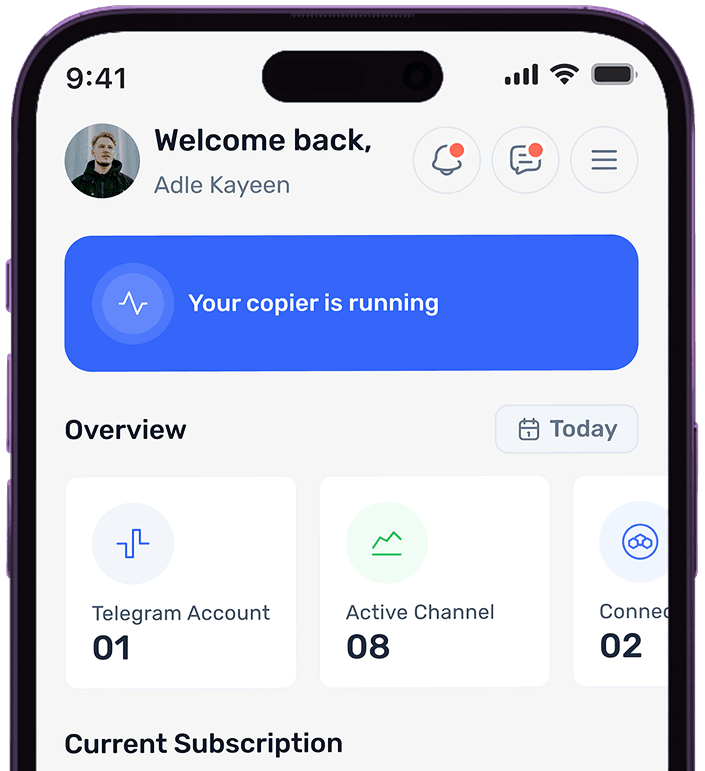
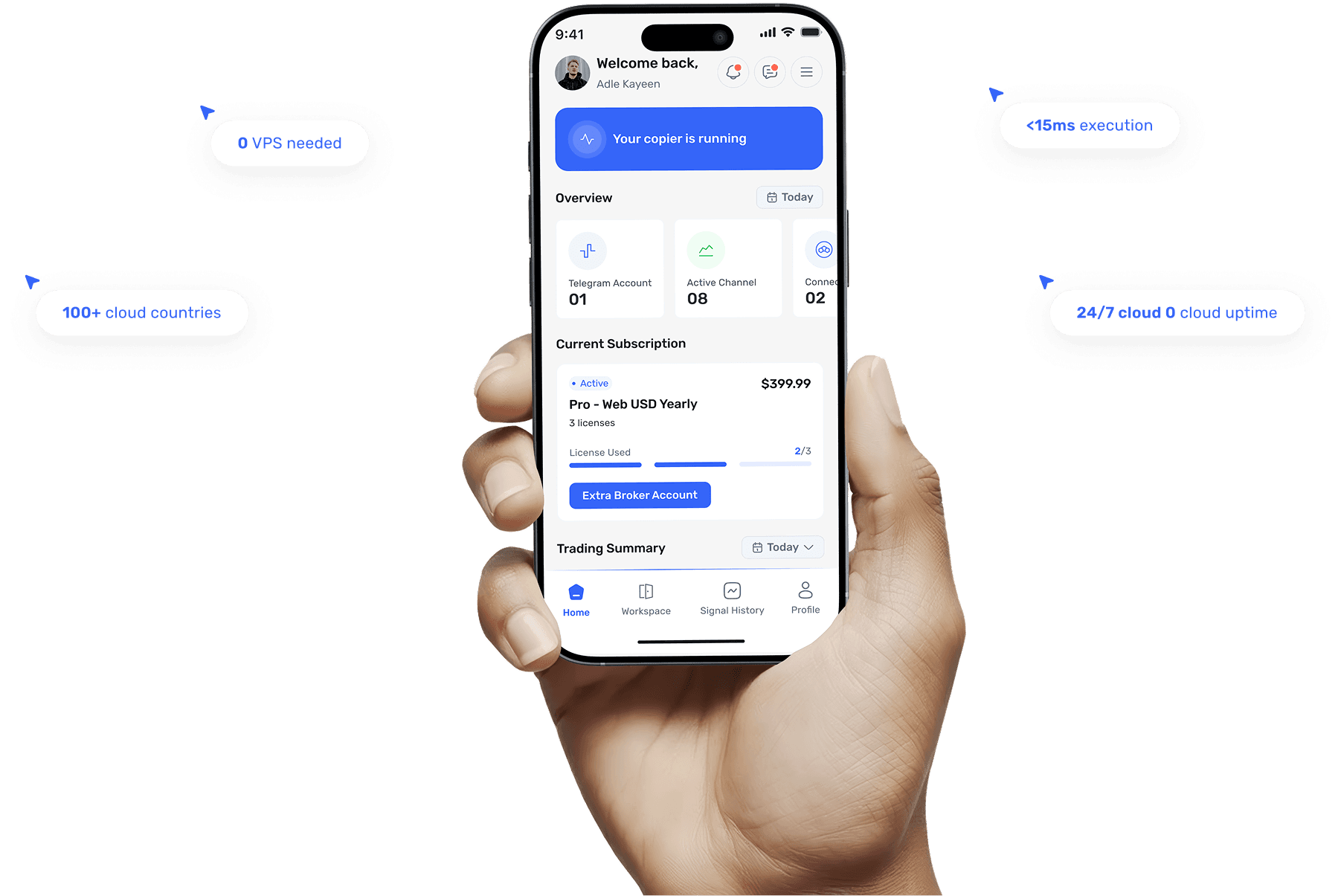
trade2sync is copy-trading software. It reads signals from your Telegram channels and groups and places the matching trades on your own broker account, using the risk rules you set. It doesn't take deposits, hold your funds or manage your money on your behalf, so you stay in control, with a regulated broker of your choosing.
- Your funds stay with your broker
- You choose a regulated broker
- Your rules, your control
- No performance promises
Legality & safety FAQ
The questions people ask most about whether copy trading is legal and safe.
Still have questions?
Can't find the answer you're looking for? Our friendly support team is here to help you anytime.
Copy trades with a tool that keeps you in control.
trade2sync copies signals from your Telegram channels to your own regulated broker account: your funds, your rules. It doesn't hold your money or manage it for you.
Download Now